Blind cleaning guide

Blind cleaning depends on both the material and the mechanism.

Roller, Roman, vertical and fabric blinds combine textiles or rigid materials with fittings and operating components. Cleaning decisions should protect both the surface and the blind system.

★★★★★4.8/5 Verified Google Reviews
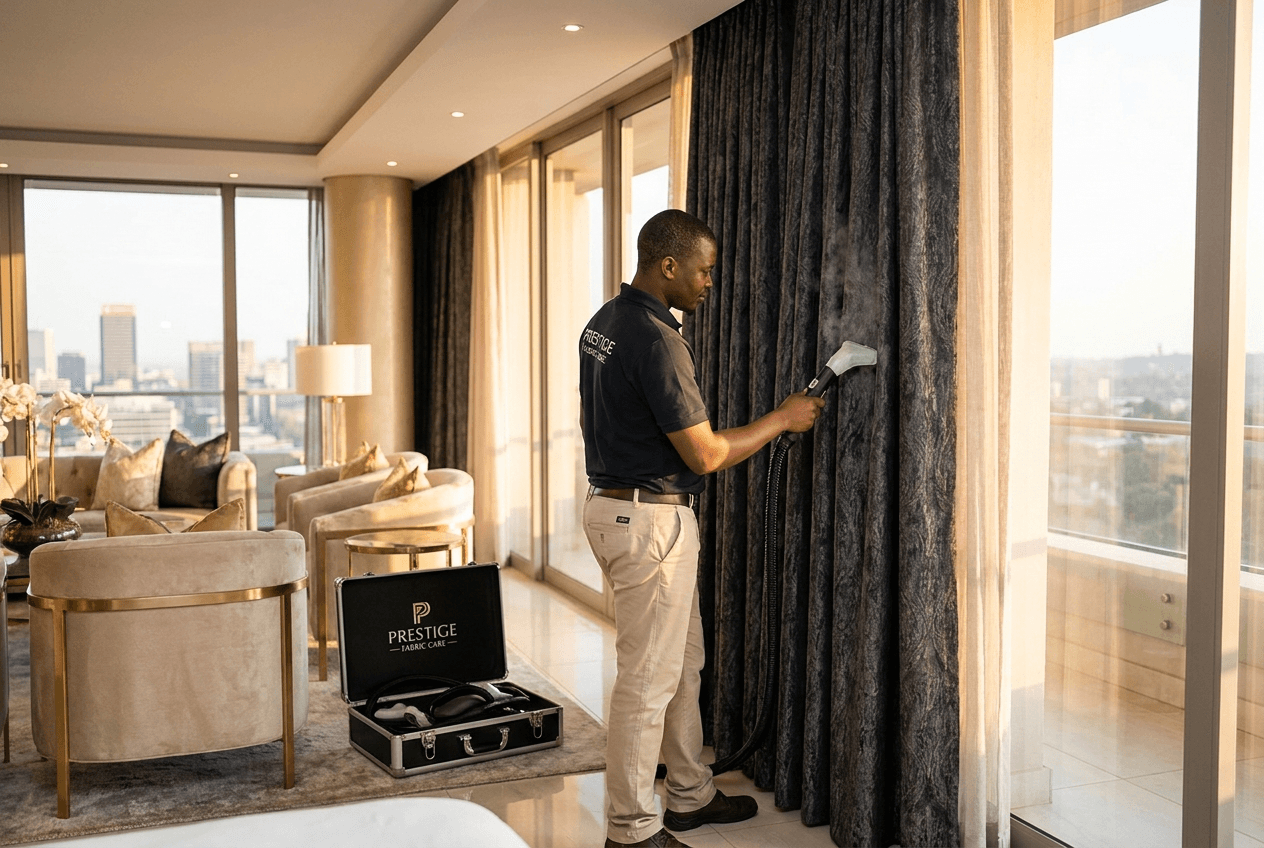
Specialist on-site curtain cleaning in a luxury Johannesburg home
On-site specialist careNo Unnecessary Curtain Removal

Assessment first

Identify what the blind is made from.

Fabric, coated textiles, vinyl, aluminium, wood-style materials and specialist finishes do not respond to the same treatment. The age and condition of cords, tracks, chains and mechanisms also matter.

Before wet treatment or spotting, the technician should check for fading, weak fabric, unstable finishes and any existing mechanical problems.

Typical considerations

Cleaning method follows blind type.

Roller blinds

Surface material, coatings and edge condition affect whether more than dry dust removal is advisable.

Roman blinds

Fabric folds, linings, rods and cords create a more complex construction that should be inspected carefully.

Vertical blinds

Individual louvres can accumulate dust and handling soil, while hooks and tracks need to remain protected.

Delicate or aged blinds

Brittle coatings, sun damage or weakened mechanisms can limit how aggressively the blind can be treated.

What cleaning cannot fix

Mechanical wear is not a cleaning problem.

Cleaning can improve dust, soil and many surface marks, but it does not repair damaged tracks, broken chains, warped louvres, peeling coatings or permanent sun fading.

Curtains and blinds together

Window treatments can be assessed as one scope.

Where a property has both curtains and blinds, a combined assessment can reduce duplicated access and planning.

Explore curtain cleaning →

Ready to discuss the property?

Choose the correct assessment path.

CallWhatsAppQuote