Curtain cleaning guide

How professional on-site curtain cleaning works.

On-site cleaning can reduce disruption because suitable curtains remain installed. The important part is deciding whether the fabric, lining, condition and site are appropriate before treatment begins.

★★★★★4.8/5 Verified Google Reviews
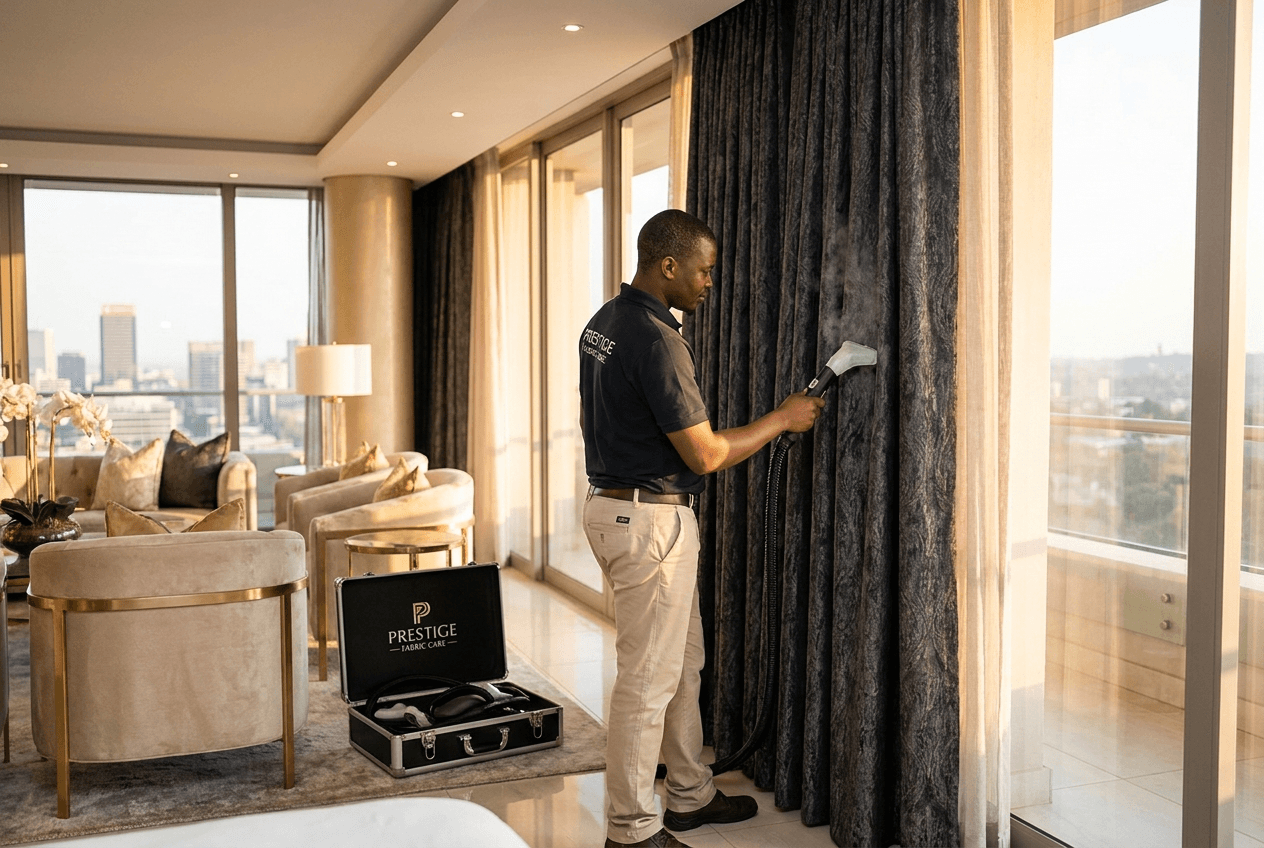
Specialist on-site curtain cleaning in a luxury Johannesburg home
On-site specialist careNo Unnecessary Curtain Removal

The short answer

On-site cleaning starts with assessment, not with a machine.

Curtains are not all built the same way. Fibre content, lining, dye stability, age, previous cleaning, sun damage, stains and the way the curtain is installed can all affect the safest cleaning approach. A professional on-site service should therefore begin by checking suitability and identifying anything that could change the method or expected result.

When the curtain is suitable, cleaning can often be carried out while it remains hanging. This avoids unnecessary removal and refitting, which is especially useful in occupied homes, offices, hotels and other spaces where keeping rooms available matters.

Step 1

Inspect the curtain and installation.

Fabric and lining

The textile type, lining and construction help determine which cleaning methods may be appropriate.

Condition

Sun damage, weak seams, previous shrinkage, dye movement or other existing damage should be identified before work starts.

Soiling and stains

General dust and traffic soil are different from oil, water marks, dye stains or unknown spots. The likely result can vary accordingly.

Access

Height, furniture, window position and room use affect how the work can be completed safely and with minimal disruption.

Step 2

Choose the cleaning approach.

“Curtain cleaning” describes the outcome, not one universal process. The selected approach should match the textile and site conditions. A method suitable for a robust synthetic curtain may not be appropriate for a delicate fabric, unstable dye or heavily damaged lining.

The assessment should also establish realistic expectations. Cleaning can improve accumulated soil, dust, many marks and odours, but it cannot reverse permanent sun fading, fibre damage, weakened fabric or every historic stain.

Step 3

Protect the surrounding area and treat priority spots.

Before general cleaning begins, the working area should be prepared and nearby surfaces protected as required. Priority marks can then be evaluated and pre-treated where the fabric allows. Aggressive stain treatment is not automatically better; excessive chemistry or moisture can create a larger problem on sensitive textiles.

Step 4

Clean systematically while the curtain remains installed.

For curtains approved for in-place cleaning, the technician works through the fabric in a controlled sequence. The objective is consistent treatment without unnecessary handling or taking the curtain off its track or rod.

Drying conditions and room ventilation still matter. “On-site” does not mean that every textile is instantly dry or that every fabric uses the same amount of moisture. The correct expectation should be discussed during assessment.

Step 5

Inspect the result.

The final check should identify the overall finish, any marks that remain and any maintenance advice relevant to the fabric. Where a stain cannot be safely pursued further, protecting the textile takes priority over forcing a cosmetic result.

When on-site cleaning may not be suitable

Some curtains should not be treated in place.

An assessment may recommend a different route when the construction or condition makes in-place treatment inappropriate.

Fragile or failing fabric

Severe sun degradation, weakened seams or brittle material can make normal handling risky.

Unstable dyes or finishes

Some dyes, coatings or previous treatments can react unpredictably and require additional caution.

Specialist construction

Very heavy, layered, embellished or unusual curtains may require a different cleaning pathway.

Contamination beyond normal cleaning

Situations involving hazardous contamination, significant mould or building-related moisture may require specialist remediation rather than ordinary textile cleaning.

Why businesses use on-site cleaning

It can reduce operational disruption.

Hotels, offices, facilities and venues often value a method that does not require removing large numbers of curtains and transporting them away. The commercial benefit is primarily operational: access, room availability and scheduling can be planned around the property.

Explore commercial curtain and textile care →

Related service

Curtain cleaning assessment.

Review the service page for the practical suitability factors used before a cleaning method is recommended.

Explore curtain cleaning →

Ready to discuss the property?

Choose the correct assessment path.

CallWhatsAppQuote